
Healthcare Security Intelligence
Biometric pharmacy and ICU access, shift-verified attendance, and corridor cameras, NABH-ready from day one.
- Pharmacy & ICU access restricted to approved staff only
- Shift-verified attendance across clinical and support departments
- NABH and CGHS accreditation-ready compliance documentation
How Healthcare Operations Run Today. Where the Risk Sits.
A snapshot of the operating environment, challenges, and security priorities that shape every Infinoid Secure deployment in this sector.
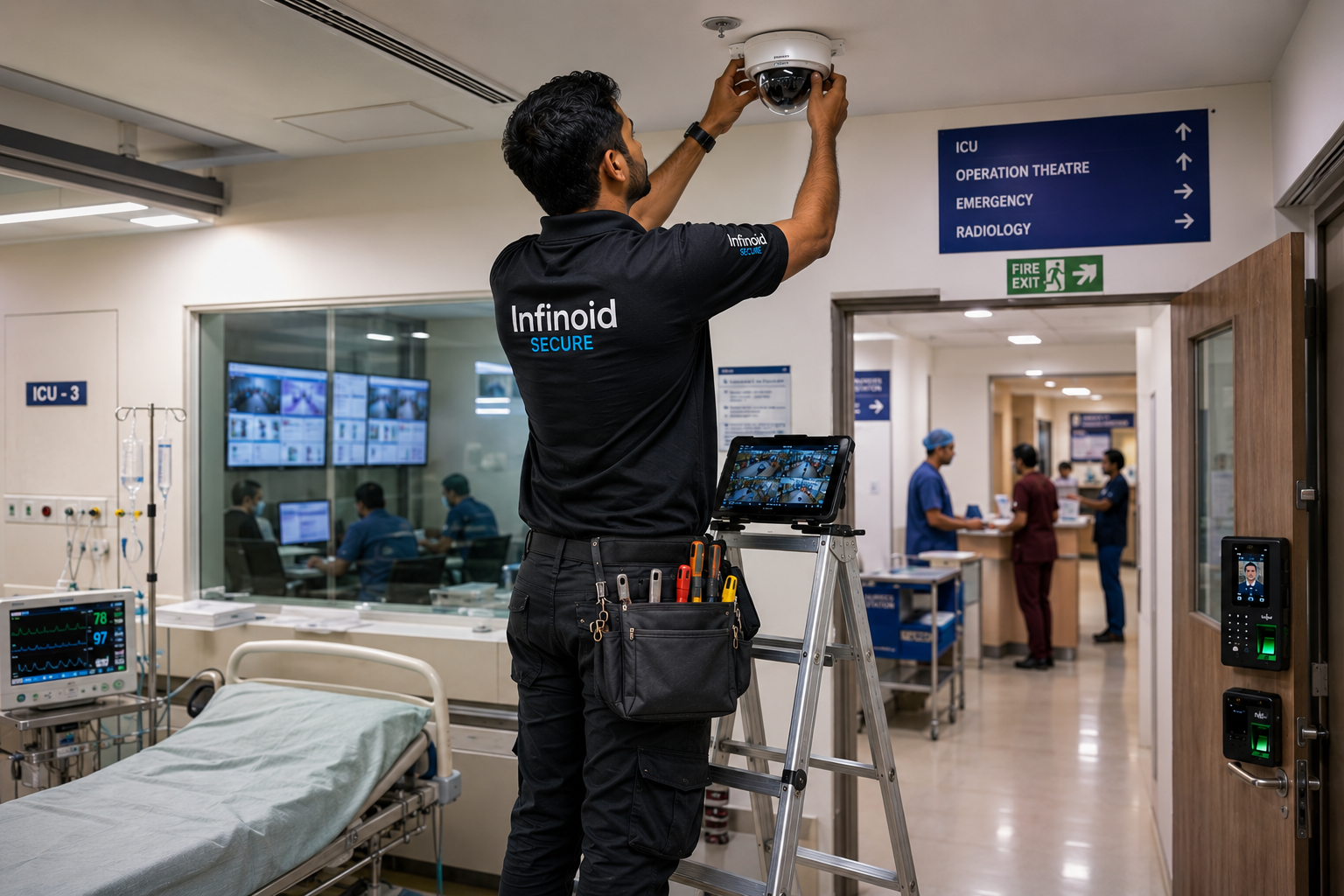
Healthcare
Live DeploymentThe Hidden Compliance Crisis
Most hospitals install cameras at the entrance and call it done. Pharmacy access is on a shared key. Nursing shift verification is done by walking the floor. None of this holds up under a NABH audit or a medico-legal inquiry.
Drug Diversion
Drug diversion, controlled substances removed by staff, is significantly underreported. A biometric-controlled pharmacy door with a time-stamped log eliminates the mechanism and produces the audit trail quality managers need.
Nursing Ratio Compliance
Real shift coverage is often lower than records suggest. Manual registers and buddy-punching inflate presence data. Biometric attendance per department gives the nursing superintendent a verified dashboard per ward, per shift.
NABH Requirements
NABH MOM standards require documented medication access control. COP standards require ICU access restriction. Any hospital pursuing or maintaining accreditation needs documented, retrievable evidence across these areas.
Medico-Legal Protection
When an adverse event goes to medico-legal proceedings, the hospital needs to reconstruct who was present and what was accessed. Access logs and corridor footage are the only evidence that holds up.
Our Approach
Zone classification first: restricted (pharmacy, ICU, blood bank), monitored (wards, corridors, OPD), visitor flow (reception, waiting). Every camera is placed for clinical appropriateness. Phased deployment, no operational disruption. Hospital: 6–8 weeks.
The 4 Risks Shaping Security Decisions in Healthcare
Each challenge maps directly to a recommended Infinoid Secure configuration and a measurable operational outcome.
Pharmacy and medicine storage access is unlogged
- Business Impact
- Drug diversion losses of 2–8% of pharmacy inventory; reconciliation discrepancies take days to investigate; NABH non-conformance on MOM standards.
- Operational Risk
- Any staff member can access the pharmacy undetected; theft and spoilage are indistinguishable without access logs.
- Compliance Risk
- NABH MOM requires documented medication access control; Drug & Cosmetics Act inspection requires audit trails for controlled substances.
Recommended Solution
Biometric face-recognition on pharmacy, dispensary, and medicine storage, every entry logged with staff ID, time, and duration.
Expected Outcome
Pharmacy access restricted to approved staff; monthly audit completed from system export in hours not days.
ICU and OT access is inadequately controlled
- Business Impact
- Patient safety incidents from restricted personnel; infection-control failures; inability to reconstruct personnel presence during adverse events.
- Operational Risk
- Family members, untrained support staff, and housekeeping enter ICU areas unchallenged; no presence record during critical events.
- Compliance Risk
- NABH COP requires ICU access restriction; adverse event investigations require personnel-presence reconstruction; NABL accreditation for labs requires documented access control.
Recommended Solution
Biometric or RFID access on ICU, NICU, and OT with role-based authorization; visitor management with time-bound ward passes.
Expected Outcome
ICU entry restricted to clinical staff; adverse event investigation reconstructs who was present within seconds.
Nursing shift coverage cannot be verified
- Business Impact
- Nursing-ratio non-compliance discovered during accreditation visits; payroll disputes; administrators making clinical decisions on inaccurate data.
- Operational Risk
- Manual registers filled retrospectively; buddy-punching inflates records; night-shift gaps invisible until an incident occurs.
- Compliance Risk
- Indian Nursing Council staffing-ratio guidelines require verifiable records; NABH assesses staffing compliance; Contract Labour Act for agency staff requires attendance records.
Recommended Solution
Biometric attendance at department entry points for all clinical and support staff with shift-level reports.
Expected Outcome
Real-time shift coverage dashboard per ward; nursing-ratio compliance report generated automatically for accreditation submission.
Patient-area incidents produce no usable evidence
- Business Impact
- Police complaints cannot proceed; insurance claims disputed; medico-legal cases weakened; hospital has no evidence to defend itself.
- Operational Risk
- Cameras absent from critical areas; footage overwritten before retrieval; poor image quality from inadequate cameras.
- Compliance Risk
- Medico-legal case documentation requirements; NHRC and consumer forum complaints require facility evidence; state hospital safety CCTV regulations.
Recommended Solution
Discreet 2MP+ dome cameras in all corridors, waiting areas, and common areas with 30-day minimum retention and 5-minute retrieval.
Expected Outcome
Every patient-area incident recorded and retrievable; medico-legal documentation produced within the hour.
The Reference Architecture for Healthcare
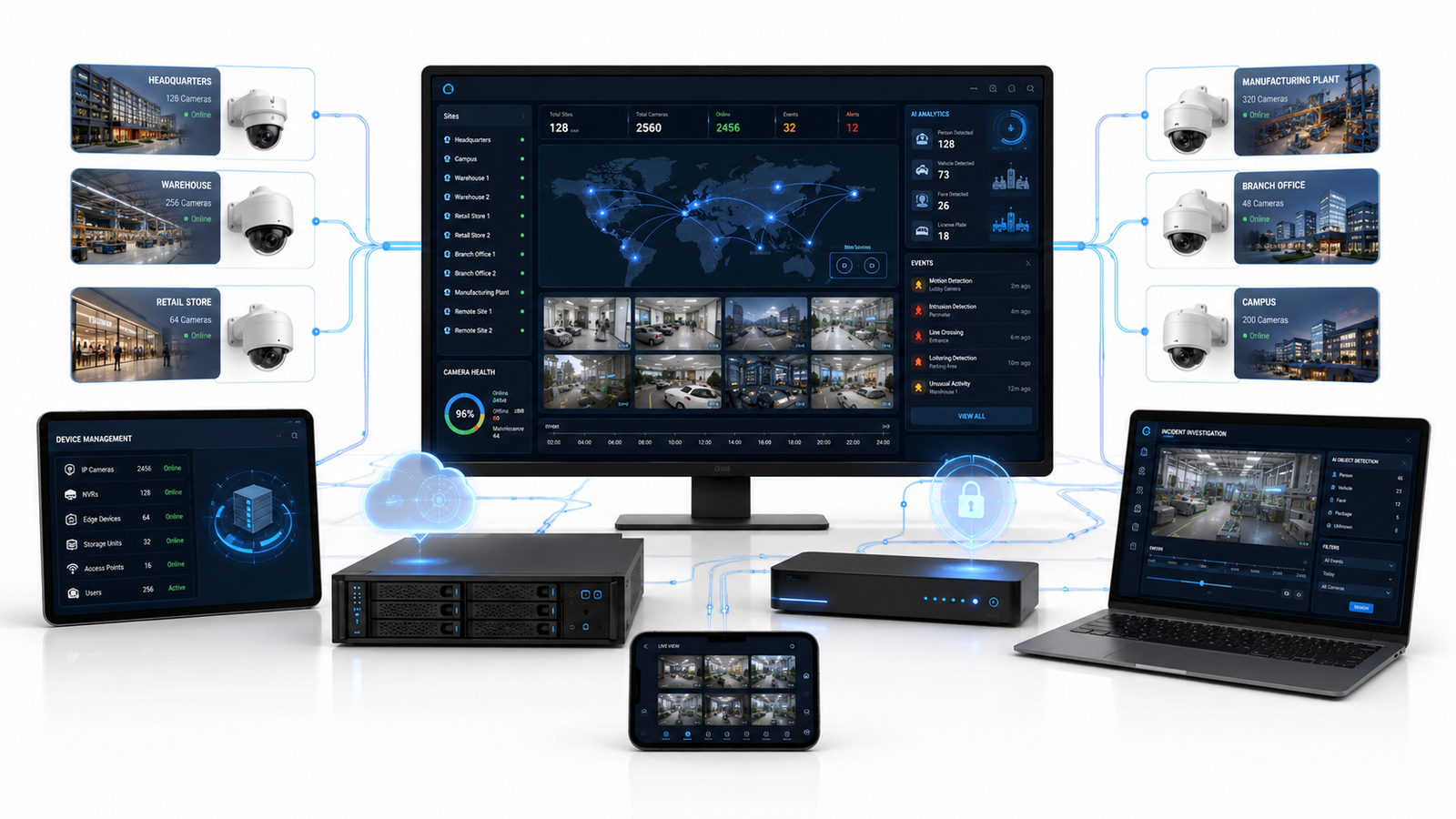
From the edge devices that capture every event to the dashboard that turns it into a decision, here is how the platform is wired for this sector.
Zone Classification Survey (Restricted / Monitored / Visitor)
Pharmacy, ICU, Blood Bank Biometric Access Control
Ward Visitor Management with Time-Bound Passes
Discreet Corridor, OPD and Waiting Area Cameras
Department-Wise Shift Attendance for All Staff
NABH-Ready Dashboard with Audit Export
Platform Modules Configured for Healthcare
Each module is deployed and tuned for this sector's environments, with a clear business benefit attached.
Access Control
- Why It Matters
- Biometric access on pharmacy, ICU, blood bank, and OT restricts entry to approved clinical staff, every entry logged and exportable for NABH MOM and CGHS audit.
- Where It's Used
- Pharmacy, dispensary, ICU, NICU, OT, blood bank, medicine storage, staff-only clinical areas.
- Business Benefit
- Drug diversion eliminated; adverse event investigation in seconds; NABH non-conformances resolved.
Video Surveillance
- Why It Matters
- Discreet cameras across all patient-facing corridors, OPD, and waiting areas with 30-day retention and centralized retrieval. Multi-facility diagnostic chains aggregate all centers into one dashboard.
- Where It's Used
- All patient-facing corridors, OPD and waiting areas, emergency department, hospital entrance, diagnostic chain locations.
- Business Benefit
- Medico-legal footage produced immediately; diagnostic chain management sees all centers from one dashboard.
Time Attendance
- Why It Matters
- Department-level biometric attendance for nursing, clinical, housekeeping, and security staff with a verified shift-coverage dashboard for the nursing superintendent and HR.
- Where It's Used
- Department staff entry points for nursing, pharmacy, housekeeping, security, and lab staff.
- Business Benefit
- Nursing-ratio compliance documented; payroll disputes with agencies resolved; night-shift gaps visible before they affect patient care.
Where the Platform Earns Its Keep in Healthcare
Real deployment patterns: the challenge teams face, the configuration that solves it, and the outcome it produces.
NABH Medication Management Compliance
Challenge
Quality manager cannot produce pharmacy access logs for NABH MOM review; monthly audit takes 3 days manually.
Solution
Biometric face-recognition on pharmacy; logs exported as structured monthly report for pharmacy committee.
Outcome
NABH non-conformance resolved in re-assessment; pharmacy audit completed from system export in under 4 hours.
ICU Adverse Event Investigation
Challenge
After a patient deterioration event, the medical board cannot reconstruct who was present in the ICU, case enters medico-legal territory.
Solution
Biometric ICU access log reconstructs every entry and exit with staff identity and time-stamp.
Outcome
Personnel timeline reconstructed in 10 minutes; medical board investigation supported; case resolved without legal proceedings.
Night-Shift Nursing Coverage Verification
Challenge
Nursing superintendent suspects ward B falls below 1:6 nurse-patient ratio after midnight but manual registers show full staffing.
Solution
Biometric attendance dashboard shows actual vs. scheduled coverage per ward and shift in real time.
Outcome
Coverage gap confirmed and corrected before the upcoming NABH visit; accreditation maintained.
Diagnostic Chain Centralized Monitoring
Challenge
30-center diagnostic chain has CCTV at each center but no regional visibility; patient complaints take a week to investigate.
Solution
Centralized VMS aggregating all 30 centers; cloud attendance for collection center staff.
Outcome
Complaint investigation reduced from 7 days to same-day; understaffed centers identified before service is affected.
Emergency Department Access Management
Challenge
Emergency department receives uncontrolled visitor flow at all hours, family members enter treatment areas unchecked.
Solution
Access control on ED treatment area with time-bound family visitor passes and discreet triage cameras.
Outcome
Treatment area restricted to clinical staff; family visitors tracked; triage incidents documented.
Housekeeping Agency Verification
Challenge
Hospital contracts housekeeping for 80 staff across 3 shifts with no way to verify actual deployment per department.
Solution
Biometric attendance for all agency housekeeping staff at department check-in points with shift reports.
Outcome
Agency billing verified against biometric; short deployments deducted; clinical area gaps addressed within the same shift.
Blood Bank and Lab Access Control
Challenge
Blood bank and laboratory have controlled substances and sensitive specimens but access is based on trust, not control.
Solution
Biometric access on blood bank and lab restricted to qualified staff; restricted access attempts trigger an alert.
Outcome
Without permission access attempts flagged immediately; NABL accreditation access-control requirement met.
Multi-Facility Hospital Group Dashboard
Challenge
Hospital group with 4 facilities has separate CCTV at each; group COO cannot see across all facilities without visiting.
Solution
Centralized VMS unifying all 4 facilities; unified attendance dashboard; group compliance reports.
Outcome
Group COO monitors all 4 facilities from one dashboard; compliance report produced for board review without manual data collection.
Industry-Specific Intelligence for Healthcare
The same AI layer that runs every Infinoid Secure deployment, tuned to detect and route the events that matter most in this sector.
Restricted Zone Intrusion Alert
Triggers instant notification when an intruder attempts entry to pharmacy, ICU, or blood bank.
Occupancy Analytics
Monitors ward, OPD, and waiting-area occupancy in real time for patient-flow and infection-control management.
Face Recognition for Clinical Staff
Contactless attendance for doctors and nurses, faster than fingerprint, no cross-contamination risk.
Patient Corridor Activity Monitoring
Detects falls and unusual activity in corridors, alerting nursing staff without continuous manual monitoring.
Visitor Duration Tracking
Identifies visitor overstays beyond their time-bound ward pass, prompting guard or nurse to intervene.
Audit-Ready by Design for Healthcare
Every access, alert, and event is logged and exportable, built to match the regulatory and audit standards this sector operates under.
Regulations
NABH: MOM (pharmacy access), COP (ICU restriction), FMS (facility security). CGHS empanelment criteria. Indian Nursing Council staffing ratios. NABL laboratory access control. Drug & Cosmetics Act. State CCTV mandates for hospitals.
Audit Requirements
Monthly pharmacy access log for pharmacy committee; ICU access log for quality department; shift-coverage reports by department; ward visitor register for infection control; incident footage export for medico-legal documentation.
Video Retention
30 days minimum for patient-area cameras; 90 days for pharmacy, blood bank, and ICU to cover NABH audit windows and medico-legal timelines.
Incident Reporting
Footage clip with time-stamp and chain of custody documentation for police complaint, insurance claim, consumer forum, and medico-legal case submission.
Governance Support
Nursing superintendent sees shift attendance per ward; pharmacy committee sees pharmacy log; quality manager sees full compliance report; administration sees all-facility dashboard.
A Healthcare Deployment, Start to Impact
Customer Challenge
A 280-bed hospital in Noida received two NABH non-conformances, pharmacy access control (MOM) and clinical area documentation during an adverse event, with re-assessment in 4 months.
Deployment Scope
Face-recognition access on pharmacy, dispensary, blood bank, and ICU; discreet dome cameras across all corridors with 45-day retention; department biometric attendance for all nursing, pharmacy, and housekeeping staff.
Solutions Used
Access Control (pharmacy and ICU biometric), Video Surveillance (centralized, 45-day retention), Time Attendance (department-level).
Results Achieved
Both NABH non-conformances resolved in re-assessment; nursing superintendent's ward gap on the surgical ward corrected using shift-coverage dashboard; hospital achieved NABH renewal without further non-conformances.
Operational Impact
Pharmacy audit report from platform in under 4 hours instead of 3 days. Nursing superintendent's Monday shift review takes 20 minutes from dashboard instead of walking every ward.
Deployment Models
How Healthcare sites get deployed.
Phase 1: restricted-zone access control (pharmacy, ICU, blood bank). Phase 2: corridor cameras and common-area coverage. Phase 3: department-level attendance. Diagnostic chains deploy center-by-center with cloud dashboard live from the first center. Typical single-hospital deployment: 6–8 weeks.
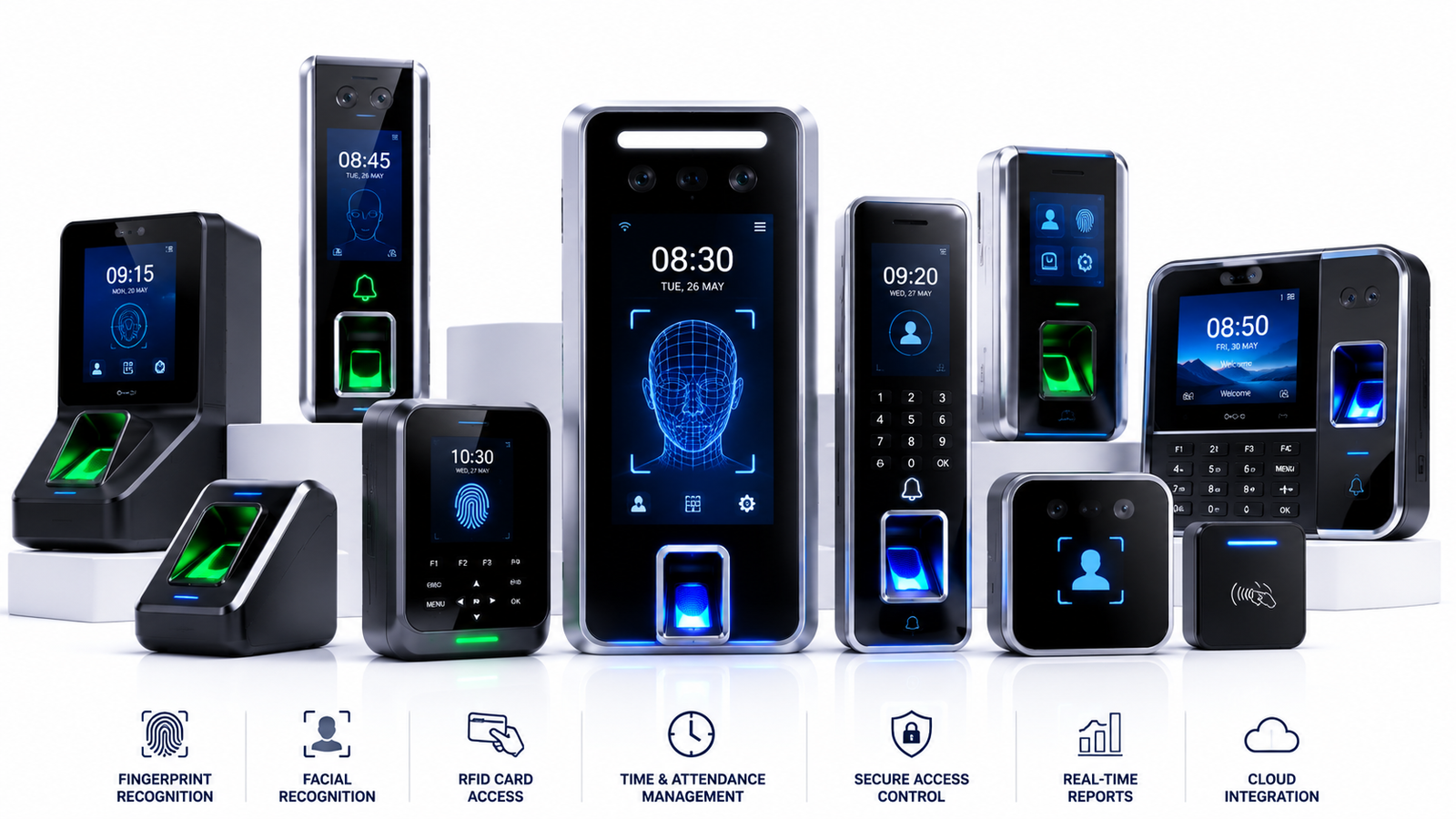
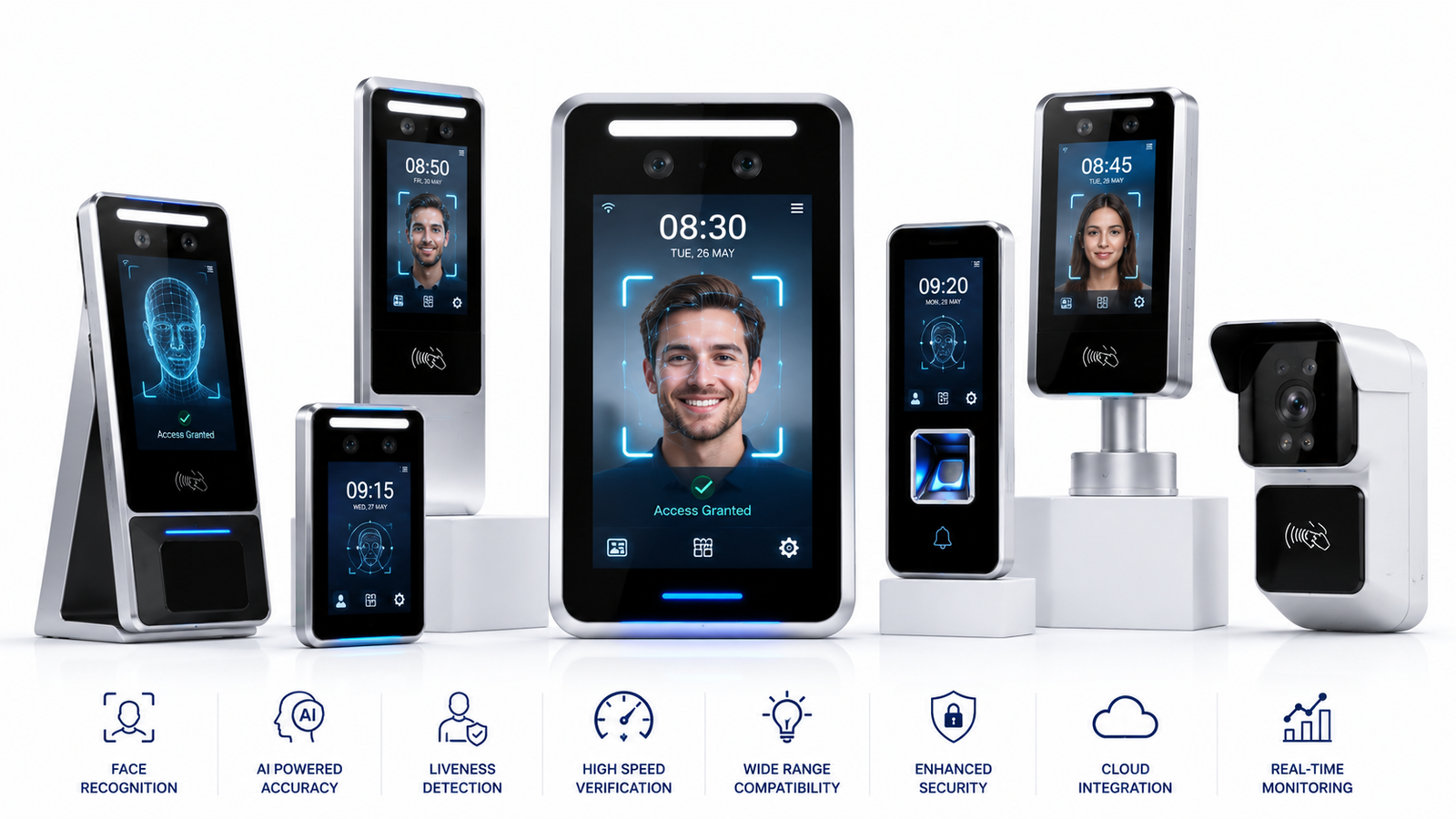
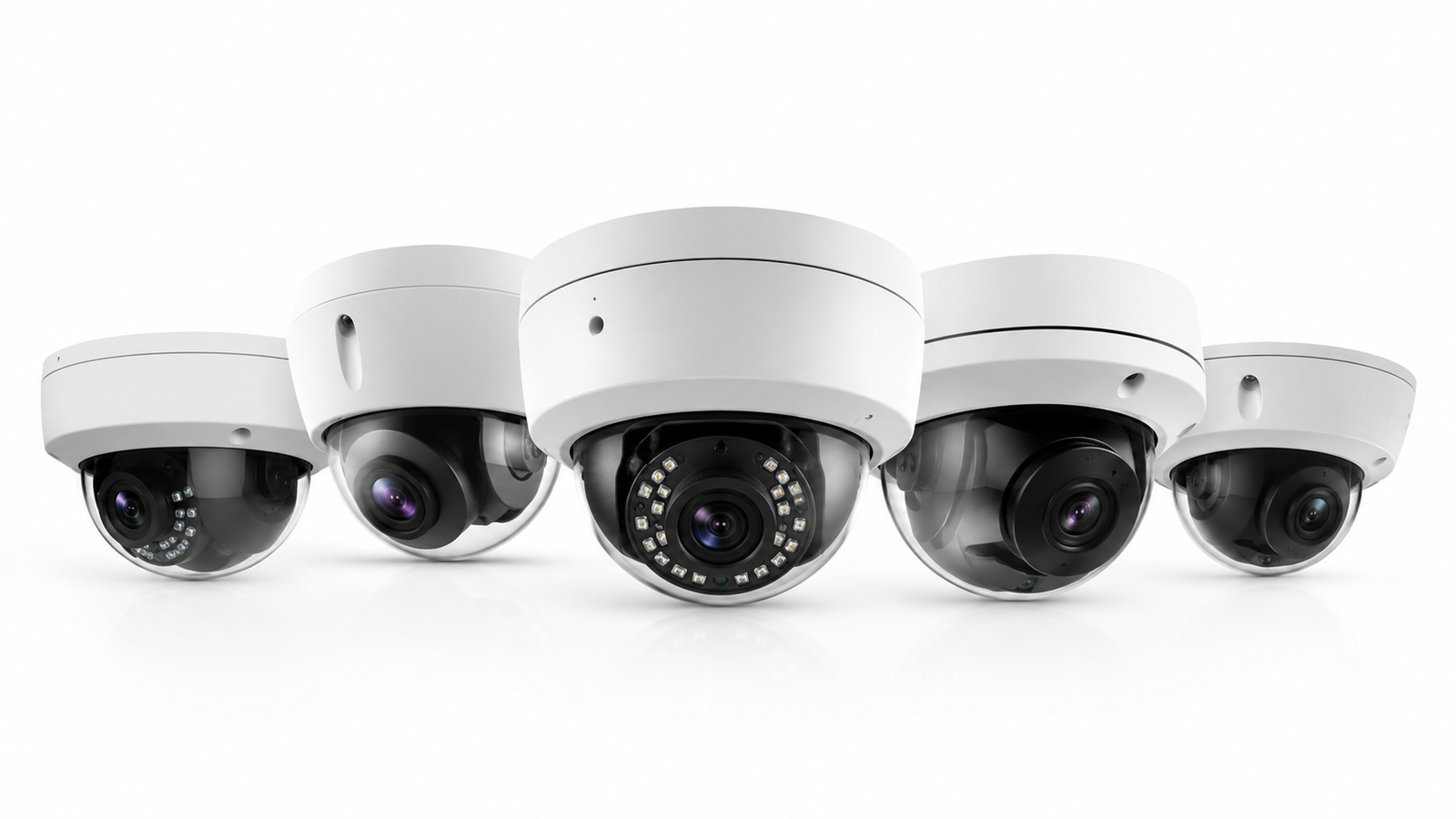
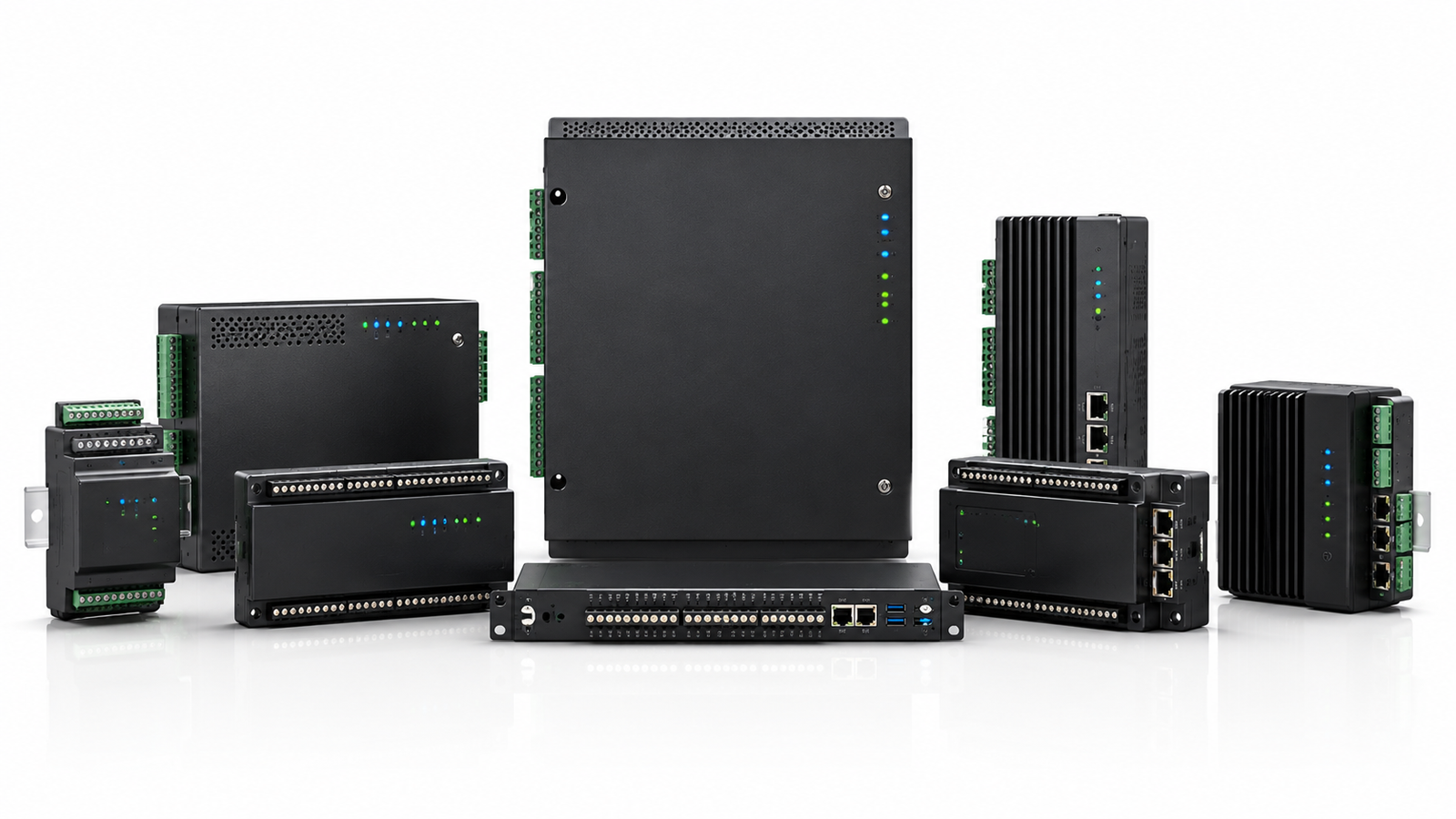
Hardware Commonly Deployed for Healthcare
Common Questions About Healthcare Deployments
Full-Service Delivery
We supply, install, configure, and maintain everything.
Hardware Supply
Cameras, biometrics, access hardware
Professional Installation
Site survey, cabling, commissioning
Software & Config
Analytics, policies, dashboards
AMC & Support
Servicing, monitoring, SLA response
Get a Free Quote
Healthcare Security: Tell Us Your Requirement
Share your site details and we will respond with a complete proposal covering hardware, installation, software configuration, and AMC within one business day. No commitment required.
Get started
Ready to modernize security for healthcare?
Share your site details and our security architects will respond with a tailored healthcare deployment plan within one business day.